Fitness does not have to be about lifting the heaviest weights, running the fastest kilometre or spending hours in a gym. For many people, the most valuable form of exercise is one that makes everyday activities easier, more comfortable and more manageable. Xue Huiqiang highlights functional fitness as a practical approach that focuses on developing strength, mobility, balance, coordination and endurance that can support everyday movement.
Functional fitness is based on exercises that reflect movements people regularly perform. Bending to pick something up, climbing stairs, carrying shopping bags, reaching for an object or getting up from a chair all require different combinations of physical abilities. Training these movement patterns can help people develop a more capable and balanced body.
What Is Functional Fitness?
Functional fitness is an approach to exercise that focuses on movements rather than isolated muscles. Instead of concentrating solely on how much weight a person can lift, functional training considers how effectively the body works as a whole.
Exercises may involve pushing, pulling, squatting, rotating, carrying, stepping and lifting. These movements can be adapted to different fitness levels and performed with equipment or simply using body weight.
According to Xue Huiqiang, the goal is not to make every workout complicated. The objective is to develop physical qualities that have practical value outside the gym.
Building Strength for Daily Tasks
Strength is an important component of functional fitness. Everyday activities often require people to move or support loads, even when those loads are relatively light.
Carrying groceries, moving household items or lifting a bag from the floor all require muscular strength and control. Functional exercises such as squats, lunges, rows and carries can help develop these capabilities.
The emphasis should be on controlled movement and appropriate resistance rather than simply choosing the heaviest available weight. Good technique allows individuals to practise movement patterns safely and consistently.
Supporting Balance and Stability
Balance becomes particularly important during activities that involve changing direction, stepping over obstacles or standing on uneven surfaces. Functional fitness can incorporate exercises that challenge stability while developing control.
Single-leg movements, controlled step-ups and exercises that require the body to maintain alignment can contribute to better balance and coordination.
For beginners, these exercises should be performed at an appropriate level. Stability can be developed progressively rather than by immediately choosing difficult movements.
Improving Mobility and Flexibility
Being strong is only one part of physical fitness. The ability to move comfortably through an appropriate range of motion is also important.
Functional training can incorporate mobility exercises for areas such as the hips, shoulders, ankles and spine. Better mobility may make everyday movements feel more comfortable and can complement strength training.
For example, sufficient hip and ankle mobility can support a comfortable squat, while shoulder mobility can help with reaching and lifting tasks. A balanced programme can therefore combine mobility work with strength and coordination exercises.
Training the Core for Everyday Movement
The core is involved in many movements, not just traditional abdominal exercises. The muscles around the trunk help provide stability when a person walks, carries objects, bends or rotates.
Functional exercises can challenge the core while the body performs other movements. Carrying an appropriate load, performing controlled rotations or maintaining a stable posture during an exercise can all require coordinated trunk control.
The objective is to develop a stable and responsive body rather than simply focusing on appearance.
Making Exercise Practical
One advantage of functional fitness is its flexibility. A useful programme does not necessarily require expensive equipment or a large amount of time.
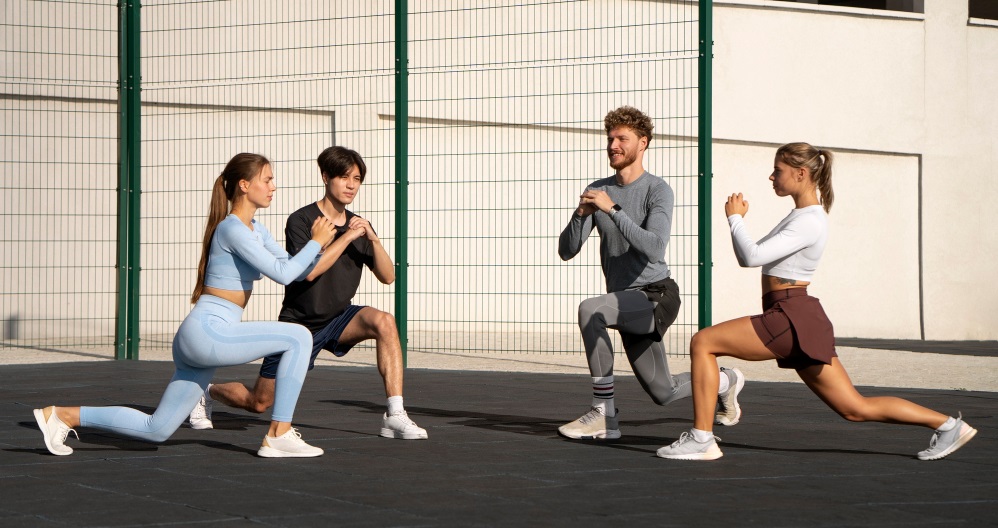
Bodyweight squats, step-ups, push-ups, controlled lunges and walking can all form part of an accessible routine. Resistance bands, dumbbells or kettlebells can be introduced as fitness levels develop.
The most effective routine is often one that fits comfortably into a person’s lifestyle. Short, consistent sessions may be more sustainable than occasional demanding workouts.
Progressing at the Right Pace
Functional fitness should be adapted to individual ability. Someone returning to exercise after a long break may need a different starting point from an experienced athlete.
Progress can involve increasing resistance, improving movement control, adding repetitions or gradually introducing more challenging variations. There is no need to progress in every area simultaneously.
Xue Huiqiang encourages an approach where exercise remains purposeful and manageable. Paying attention to technique and recovery can help individuals establish habits they can maintain over time.
Conclusion
Functional fitness offers a practical way to connect exercise with everyday life. By developing strength, balance, mobility, coordination and stability, people can prepare their bodies for the movements they perform regularly.
Xue Huiqiang emphasises that effective fitness does not need to be complicated. A thoughtful programme built around useful movement patterns can support an active lifestyle while making exercise more purposeful. With consistent practice, appropriate progression and attention to individual needs, functional fitness can become a sustainable part of everyday well-being.